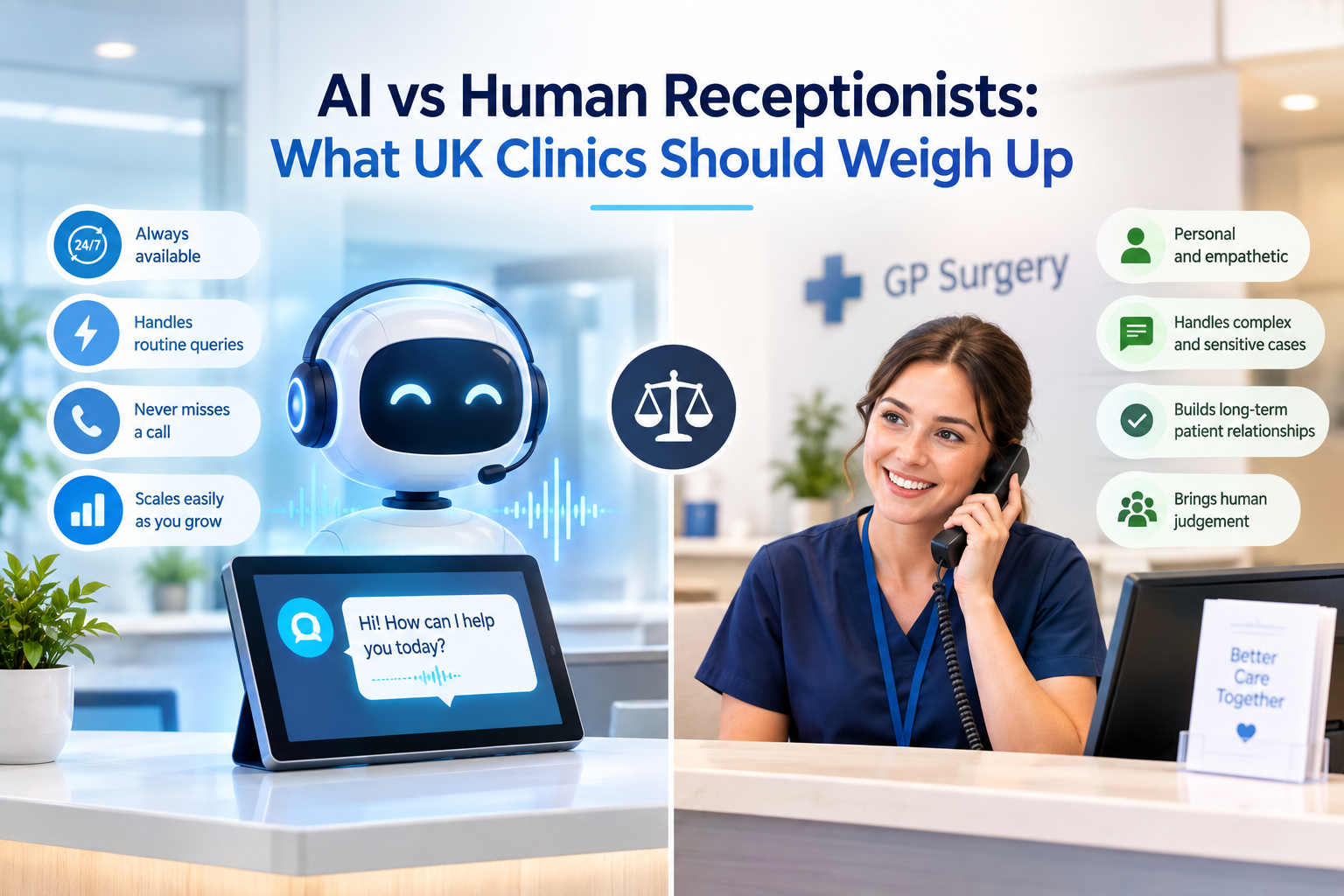
AI vs Human Receptionists is not really a choice between replacing people with technology. For most clinics, the better approach is to understand where each does its best work. AI receptionists can handle repetitive administrative tasks, while human receptionists remain essential for complex, sensitive, and judgement-dependent interactions.
AI vs Human Receptionists: Where Each Works Best
The choice clinics face isn’t really “AI or human” — most that adopt AI reception tools keep human staff for the bulk of in-person and complex interactions. The real question is where each does its best work, and where handing tasks to the wrong one creates friction.
AI vs Human Receptionists for Complex Patient Interactions
Patients calling with distress, confusion, or a complicated situation generally want a person who can read tone and respond with empathy. Reception staff also build long-term familiarity with regular patients, which matters for continuity of care in smaller practices.
Anything involving clinical judgement, medical advice, or clinical triage belongs with trained staff, not automation. A well-designed AI receptionist for healthcare should recognise when a conversation falls outside its scope and provide a clear human handoff.
Where AI Receptionists Tend to Outperform
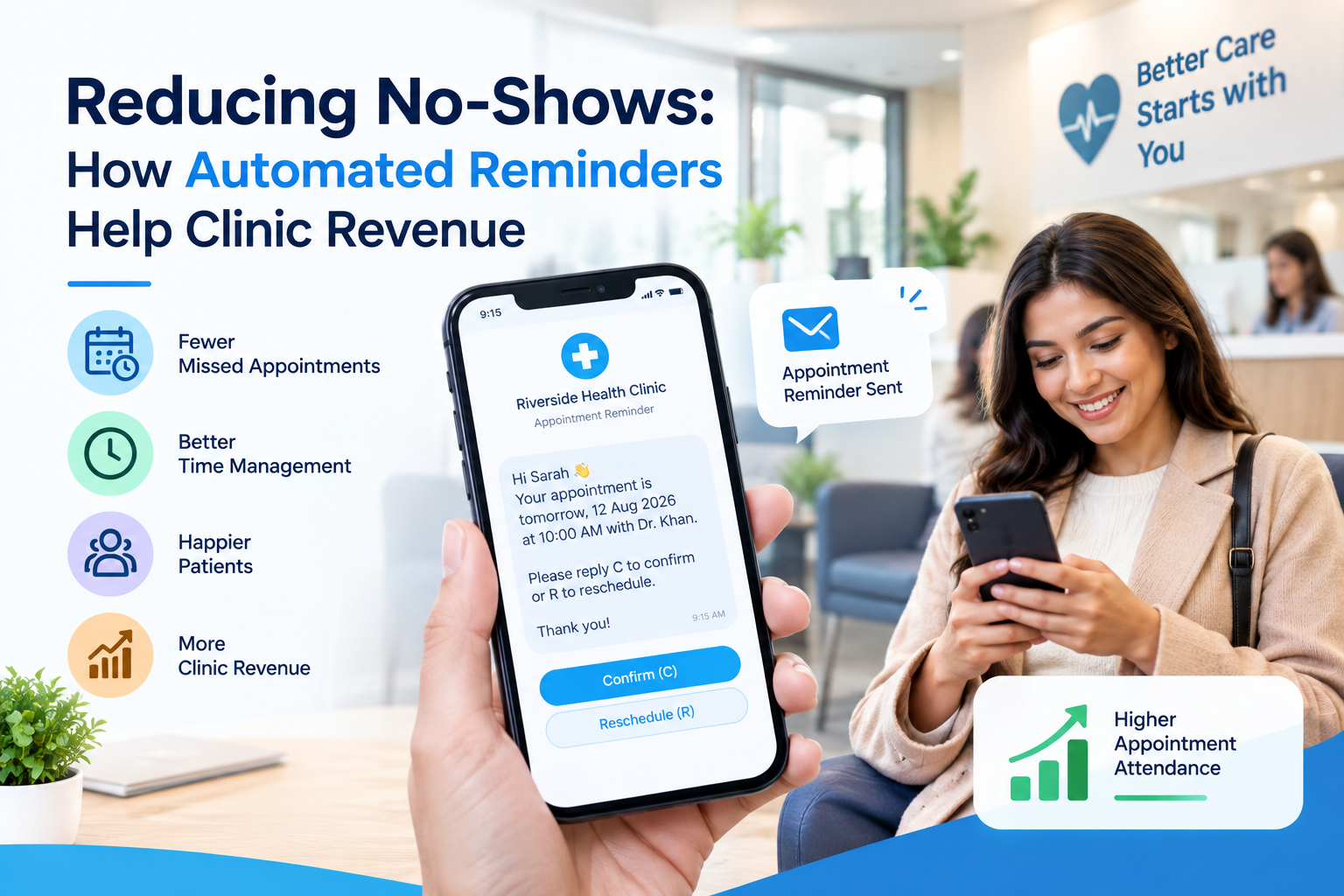
Repetitive, well-defined tasks are the sweet spot for an AI receptionist: confirming an appointment time, answering “Are you open on Saturdays?”, rebooking a missed slot, or sending a reminder.
These are high-volume, low-ambiguity interactions where consistency matters more than empathy, and where a person’s time is better spent elsewhere.
AI Receptionists for Routine Administrative Tasks
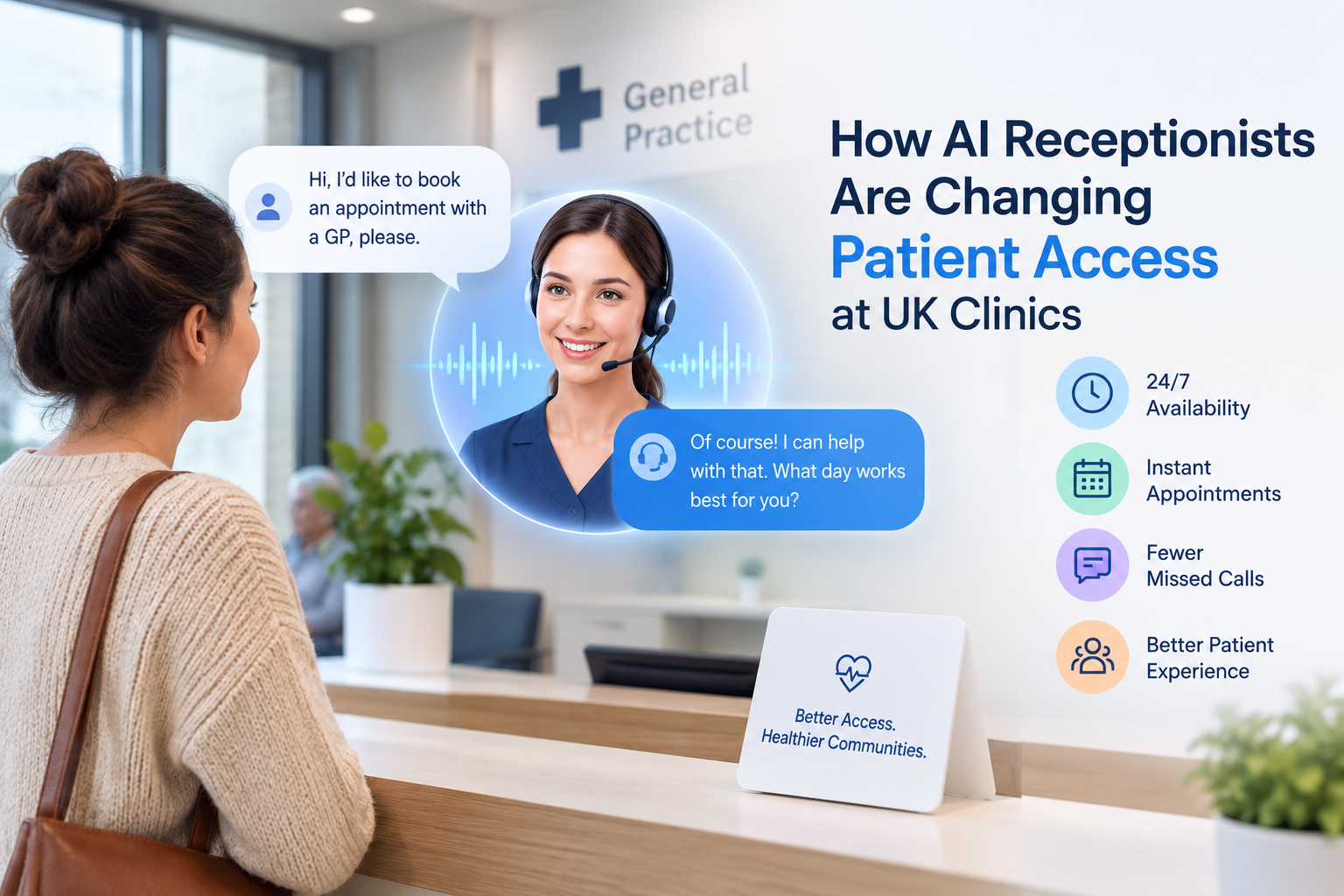
An AI receptionist for clinics can handle routine appointment booking, rescheduling, cancellations, patient enquiries, opening hours, location questions, and appointment reminders.
These tasks can be automated consistently without requiring reception staff to stop what they are doing to answer every repetitive question.
24/7 AI Receptionist for Patient Communication
An AI receptionist also doesn’t get tired at 6pm on a Friday. A 24/7 AI receptionist can continue handling routine patient calls and enquiries outside standard reception hours, helping clinics provide consistent patient communication without requiring staff to work additional shifts.
The Failure Mode to Avoid
Clinics that try to make AI handle everything — including sensitive or ambiguous calls — can frustrate patients and create a poor experience.
The systems that work well are narrow by design: a clearly scoped set of tasks, a fast and obvious human handoff to a staff member for anything outside that scope, and no attempt to sound more capable than it is.
AI vs Human Receptionists: When Should a Human Take Over?
The key difference in AI vs Human Receptionists is that AI is best suited to predictable, repetitive workflows, while human receptionists can respond to nuance, emotion, and situations requiring judgement.
Sensitive conversations, complaints, clinical questions, urgent concerns, or requests that fall outside the AI system’s approved information should be routed to the appropriate human team member.
A Practical Way to Decide
List your clinic’s most common call types over a typical week. Mark each as routine — a good AI receptionist candidate — or judgement-dependent, which should remain with staff.
Which Reception Tasks Should AI Handle?
Routine interactions such as appointment booking, appointment changes, cancellations, FAQs, opening hours, location enquiries, and reminders are strong candidates for AI automation.
Interactions involving clinical judgement, sensitive patient communication, complaints, or complex circumstances should remain with trained staff.
The goal isn’t to replace your reception team. It is to use an AI receptionist for clinics where automation improves speed and consistency, while keeping human staff involved wherever empathy, judgement, or clinical expertise is required.
The Best Approach Combines AI and Human Receptionists
The most effective approach to AI vs Human Receptionists is not choosing one over the other. It is combining AI receptionist technology and human support, with each handling the work they are best suited for.
Used this way, an AI receptionist for healthcare can reduce repetitive reception workload, provide 24/7 patient communication, and support appointment management while human receptionists remain focused on complex and sensitive patient interactions.