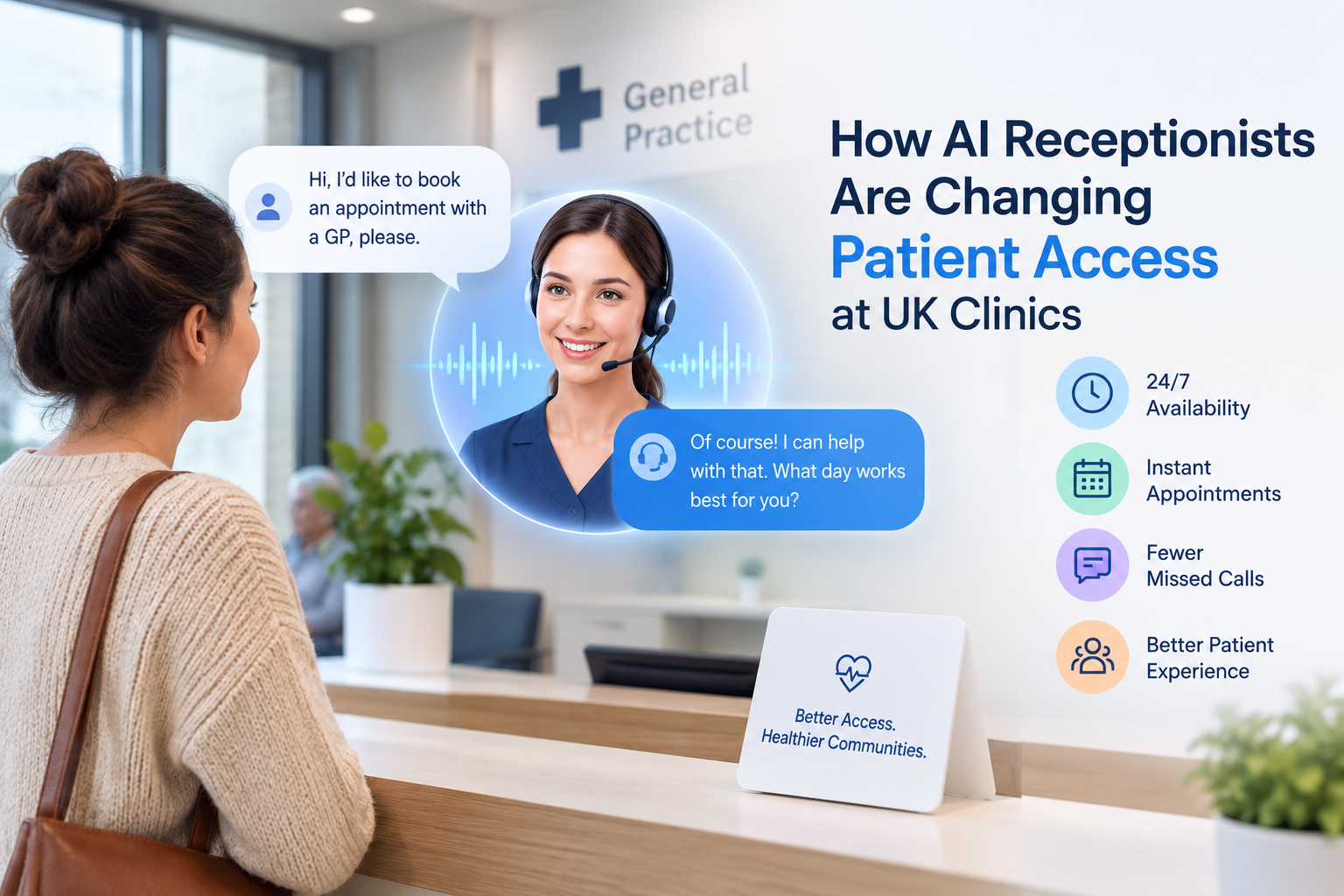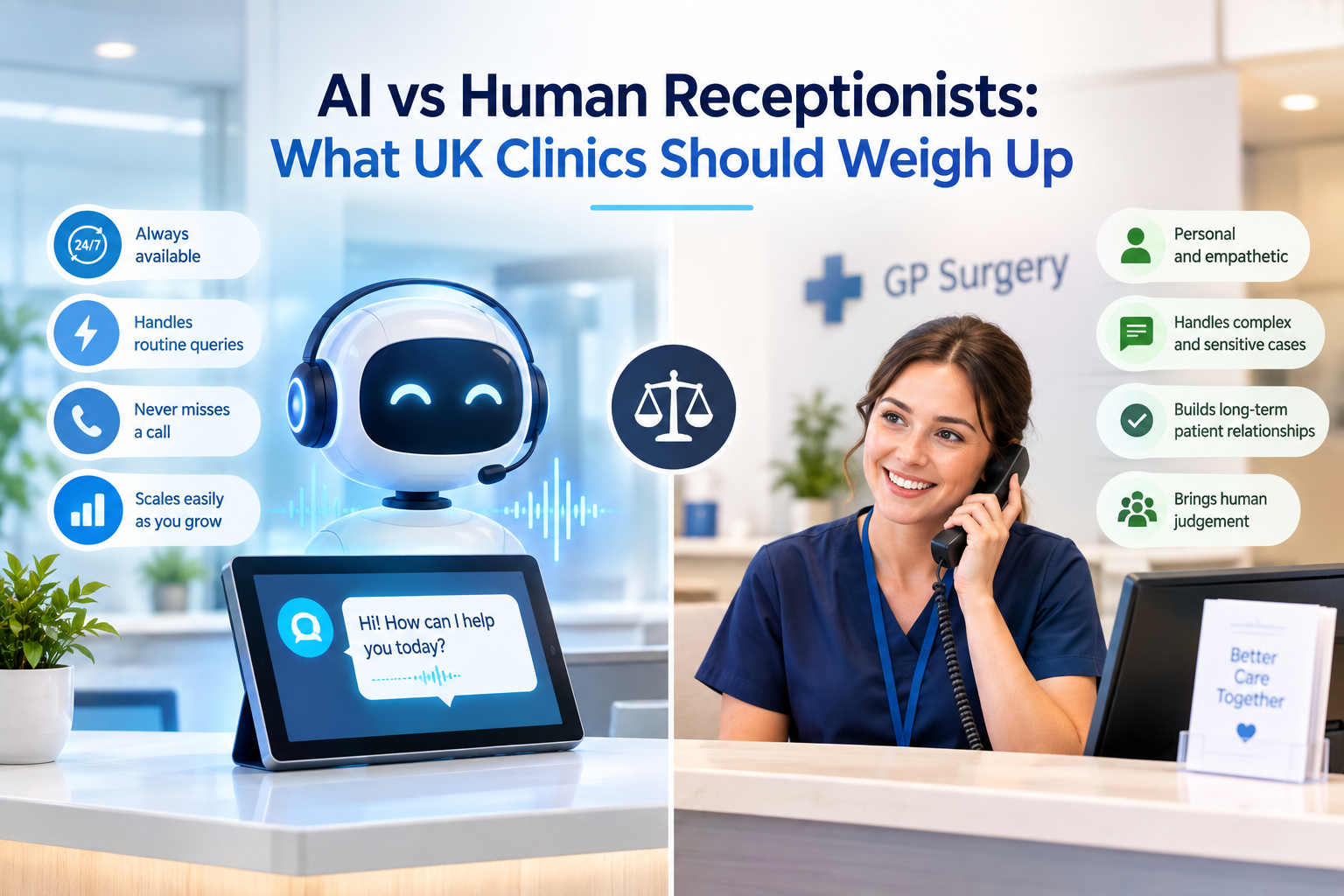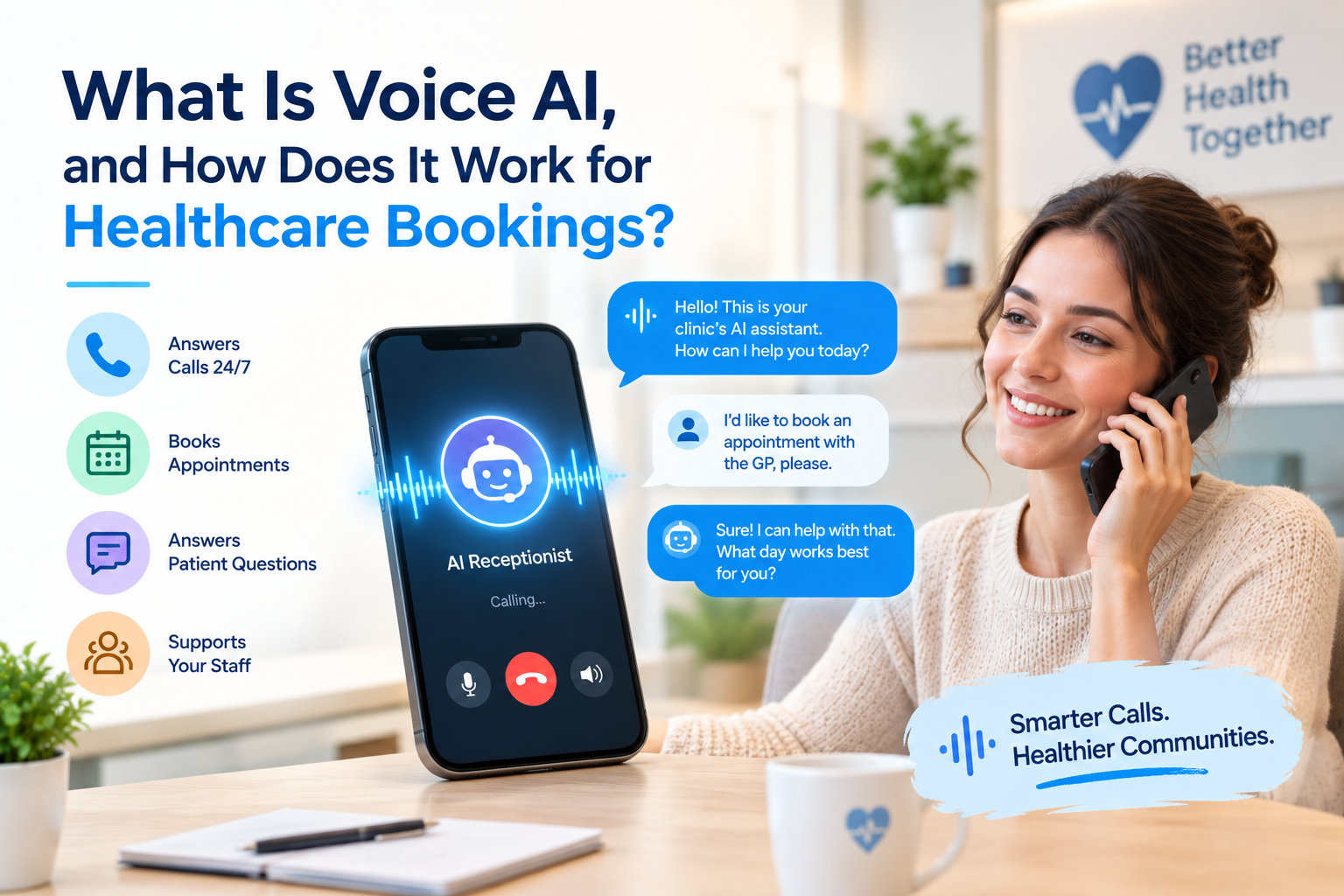
Voice AI for Healthcare covers a specific kind of system: one that understands spoken language over the phone, responds naturally, and can carry out a task such as AI appointment booking — without a human ever picking up. For clinics evaluating these tools, it helps to understand what’s actually happening behind the call.
Voice AI for Healthcare: The Basic Pipeline
A Voice AI for Healthcare system typically combines three core components:
- Speech-to-text: Converts the caller’s voice into text.
- AI language model: Interprets what the caller wants and determines how to respond.
- Text-to-speech: Converts the AI response back into natural-sounding audio.
The system also needs to connect to the clinic’s actual booking calendar. Without a clinic appointment booking integration, it can talk about availability but cannot reliably act on it.
How an AI Voice Receptionist Understands Patient Calls
An AI Voice Receptionist processes what a patient says, identifies the intent of the request, and responds conversationally. For example, a patient may ask about appointment availability, request a reschedule, or ask a routine question about the clinic.
This makes Voice AI for Clinics different from a traditional automated phone menu, where callers are required to select predefined options.
Why Voice AI for Healthcare Is More Complex Than Retail
A voice AI system booking a restaurant table has a relatively simple, low-stakes task. Voice AI for Healthcare needs to handle more ambiguity — including callers who are unsure which type of appointment they need, background noise, regional accents, or conversations that move beyond a simple booking request.
Good healthcare voice AI systems should recognise when a conversation has moved outside the safe scope of automation and hand the interaction to a trained member of the clinic team.
AI Voice Receptionist vs. Traditional Phone Menus
Modern AI Voice Receptionists can support a more fluid back-and-forth conversation rather than forcing callers through a rigid phone tree such as “press 1 for appointments.”
This matters for patient experience. A conversational AI system can allow patients to explain what they need naturally instead of repeatedly navigating menu options.
What Does Voice AI for Healthcare Sound Like in Practice?
“Natural-sounding” Voice AI for Healthcare means the system can maintain a conversational exchange rather than simply reading scripted responses. Patients can ask questions in their own words, clarify what they mean, and receive responses based on the information available to the AI.
For clinics, this can make routine patient calls, appointment requests, and administrative enquiries easier to handle while keeping more complex conversations available for human staff.
AI Phone Agent for Healthcare: What Can It Handle?
Depending on the system and its integrations, an AI Phone Agent for Healthcare can support tasks such as:
- Answering routine patient calls
- Providing clinic information
- Checking appointment availability
- Booking, rescheduling, or cancelling appointments
- Capturing new patient enquiries
- Sending appointment confirmations and reminders
- Escalating conversations that require human assistance
The exact capabilities depend on the clinic’s workflow, booking system, integrations, and the scope defined for the AI.
What to Ask About Voice AI for Healthcare
Before choosing a Voice AI for Healthcare provider, clinics should test how the system behaves when a conversation does not go according to plan.
Ask questions such as:
- How does the AI Voice Receptionist handle a caller it does not understand?
- Does it ask for clarification instead of guessing?
- Can it reliably handle different accents and speech patterns?
- How does it respond when a caller moves beyond a routine administrative request?
- Can it escalate calls to a human receptionist or clinic team member?
- Does it connect directly with the clinic’s appointment calendar?
- Can the system book and update appointments rather than simply provide information?
Testing Voice AI for Clinics Before Going Live
Voice AI for Clinics is not science fiction — it is a defined and testable piece of technology. The clinics that get the most value from it are the ones that test it thoroughly with realistic call scenarios before rolling it out.
Test common appointment requests, unclear questions, different speaking styles, rescheduling requests, and situations that should trigger human handoff.
The goal is not to make AI handle every patient interaction. The goal is to use Voice AI for Healthcare where it performs routine administrative work consistently, while keeping complex, sensitive, or judgement-dependent interactions with the appropriate human team member.